Books

Originals

In leadership conversations, we often celebrate creativity and innovation. Yet, in practice, most organizations reward reliability, predictability, and risk avoidance. This tension creates a fundamental challenge: how do we encourage people to challenge the status quo without destabilizing what already works?

In Originals, Adam Grant explores what separates those who simply generate ideas from those who successfully champion them. I have summarised perspectives from each chapter below.

1. Creative Destruction

Grant highlights a paradox: high achievement motivation can actually suppress originality. When the desire to succeed becomes intense, it is often accompanied by a deep fear of failure. Instead of pursuing bold ideas, individuals gravitate toward safer paths that guarantee success.

Many great creators were held back not by lack of talent, but by reluctance to challenge entrenched norms. Originality is an act of creative destruction.Originals achieve this by questioning defaults and balancing risk portfolio.

2. Blind Inventors and One-Eyed Investors

Experience is valuable, but it can also become a constraint. Success in one domain does not automatically translate to success in another. Entrepreneurs who thrive in a familiar field often struggle when they venture into new territories. Domain inexperience, hubris and enthusiasm can lead to blind spots. Original thinking benefits from fresh perspectives, but execution still requires contextual understanding. Leaders must recognize that innovation demands both new viewpoints and grounded expertise.

3. Out on a Limb

Leadership influence depends not only on authority, but on how people perceive and respect one another. We need to tease apart two major dimensions of social hierarchy that are often lumped together: power and status. Power involves exercising control or authority over others while status is being respected and admired. Original ideas are more likely to gain traction when individuals build status rather than rely on power. Status creates psychological safety for dissent, while power can silence it.

4. Fools Rush In

Contrary to popular belief, successful innovators are not reckless risk-takers. Risk seekers often fail because they act impulsively, chasing novelty without preparation. In contrast, more risk-averse entrepreneurs tend to succeed by carefully timing their entry and balancing risk portfolios. The book explores wwo radically different styles of innovation: conceptual and experimental. Conceptual innovators formulate a big idea and set out to execute it. Experimental innovators solve problems through trial and error, learning and evolving as they go along. Both paths can lead to originality. The difference lies not in courage alone, but in how individuals approach uncertainty.

5. Goldilocks and the Trojan Horse

Original ideas often face resistance when they appear too radical or unfamiliar. Successful change agents find ways to present ideas that are neither too extreme nor too conventional. They frame innovation in ways that feel recognizable and acceptable while still introducing meaningful change. Sometimes, originality succeeds not by confronting systems directly, but by working through them like a Trojan horse that enters quietly before transforming from within.

6. Rebel with a Cause

Original thinkers are often seen as rebels, but their motivations differ from simple nonconformity. Originals do not resist norms for the sake of rebellion. Instead, they are driven by a deep commitment to purpose and improvement. Their actions are anchored in values, not just defiance. Leadership plays a crucial role here. When organizations channel rebellious energy toward constructive goals, dissent becomes a source of progress rather than disruption.

7. Rethinking Groupthink

Strong cultures can either enable originality or suppress it. The presence of dissent distinguishes a strong culture from a cult. Healthy cultures encourage employees to challenge ideas, question decisions and offer alternative viewpoints. Individuals who drive such cultures as shapers – independent thinkers who are curious, nonconforming and rebellious. They practice non-hierarchical honesty, speaking up regardless of position. Organizations that truly value diversity do not merely tolerate dissent, they actively promote it.

8. Rocking the Boat and Keeping It Steady

Originality requires balancing optimism with caution using two mindsets: strategic optimism and defensive pessimism. Strateegic optimists anticipate the best, staying calm and setting high expectations. Defensive pessimists expect the worst, feeling anxious and imagining all things that can go wrong. Psychologically, we have a go system and stop system. Stop system slows us down and makes us cautious and vigilant. Go system revs us up and makes us excited. When we are not yet committed to a particular action, thinking like a defensive pessimist can be hazardous. But once we have settled on a course of action, when anxieties creep in, it is better to think like a defensive pessimist and confront them directly. Successful originals learn to switch between these mindsets depending on the stage of action.

Originals challenges the romanticized view of innovation as a product of bold personalities alone. Instead, it shows that originality emerges from a combination of mindset, strategy, social dynamics and leadership support. The book’s central message is clear: originality is not about constant risk-taking or rebellious behavior. It is about thoughtfully questioning defaults, managing risks intelligently, encouraging dissent and creating environments where new ideas can survive long enough to succeed.

For leaders, the task is not merely to demand innovation but to build conditions where challenging the status quo is both possible and safe.

Loonshots

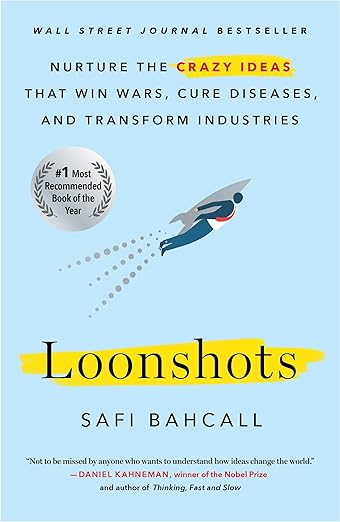
I received a recommendation to read Loonshots by Safi Bahcall in the context of transformation leadership, particularly the idea of intellectual stimulation. This book challenges a widely held assumption about group behavior that radical breakthroughs are primarily driven by culture. Instead, it explains how small shifts in structure and incentives can cause teams to suddenly move from embracing bold ideas to rejecting them and what leaders can do to ensure that breakthrough ideas survive inside large organizations.

A loonshot is a high-risk, high-reward idea that challenges existing beliefs. Because of this, loonshots are widely dismissed ideas and their champions are frequently written off as crazy. Ironically, the most important breakthroughs in history began exactly this way as loonshots.

In Loonshots, Safi Bahcall explores why organizations repeatedly fail to nurture such ideas. He does not blame people, culture, or leadership intent. Instead, he focuses on the structures and incentives that shape behavior. The book’s central insight is simple yet powerful: organizations don’t fail at innovation because they lack vision; they fail because they unknowingly cross invisible thresholds that change how people act.

The book introduces two essential modes of operation:

  • Loonshots: Experimental ideas focused on discovering something new. People who excel here operate with an artist mindset.
  • Franchises: Proven products, processes, or businesses focused on execution. Excellence here requires a soldier mindset.

Both are essential. Loonshots create the future. Franchises sustain the present. The problem arises when organizations treat both modes the same way. Execution-oriented rules of predictability, efficiency, accountability are detrimental to early-stage ideas. At the same time, excessive experimentation can destabilize franchises. Great leaders don’t choose between loonshots and franchises. They promote both.

The book outlines four rules leaders can follow to achieve a healthy balance between loonshots and franschises in large organizations.

1. Separate the Phases

  • Separate artists and soldiers.
  • Tailor tools, incentives and metrics to the phase.
  • Watch for blind spots while nurturing both types of loonshots: P-type (product-driven) and S-type (strategy-driven).

2. Create Dynamic Equilibrium

  • Love artists and soldiers equally.
  • Manage the transfer, not the technology. Be a gardener, not a Moses.
  • Appoint and train project champions who can bridge the divide by being aware of false fails and listening to the suck with curiosity.

3. Spread a System Mindset

  • Keep asking why the organization made the choices it did.
  • Keep asking how decision-making processes can be improved.
  • Identify teams operating with outcome mindsets and help them shift toward a systems mindset.

4. Raise the Magic Number

Formula for the critical size of the organization or the magic number above which the balance shift from favoring project work to politics: M = E × S² × F / G, where E = soft equity, S = span of control, F = project-skill fit, G = growth (compensation / promotion). 

Leaders can raise this threshold by acting on key levers:

  • Reduce the return on politics by making lobbying for promotions and compensation difficult.
  • Use soft equity, non-financial rewards that carry disproportionate impact.
  • Increase project–skill fit by actively scanning the org for mismatches.
  • Fix the middle by paying attention to middle-management layers, where politics often overpower innovation.
  • Fine-tune spans of control: widen spans in loonshot groups to encourage looser controls, experimentation, and peer-to-peer problem-solving.
  • Bring a gun to the knife fight. Use specialists who understand these subtle dynamics.

Loonshots reframes innovation as a systems problem, not a people problem. Breakthrough ideas don’t fail because they are wrong; they fail because organizations unintentionally make them impossible to survive. For a loonshot nursery to flourish, three conditions must be present: Phase separation, Dynamic equilibrium and Critical mass.

The leadership challenge is not to demand more creativity, but to design conditions where fragile ideas can take root without disrupting what already works. When leaders get this balance right, they don’t just innovate, they build organizations capable of doing so again and again.

The Anatomy Of Peace

In my earlier blog on Leadership and Self-Deception, I explored how self-betrayal leads us “into the box,” distorting how we see ourselves and others. That book helped explain why well-intentioned leaders sometimes create resistance, mistrust, and disengagement—often without realizing it.

The Anatomy of Peace, also by the Arbinger Institute, picks up exactly where that conversation left off. If Leadership and Self-Deception explains how we get trapped, The Anatomy of Peace goes further to explain why conflict persists within teams, organizations and relationships. And what it truly takes to resolve it.

The book argues that conflict is not primarily about behavior, communication, or systems. Instead, it begins with something more fundamental: the condition of the human heart.

The Heart of Peace

The starting point of The Anatomy of Peace is simple yet confronting.

  • When my heart is at peace, I see others as people.
  • When my heart is at war, I see others as objects.

This distinction matters because our effectiveness as leaders is shaped less by what we do and more by how we see. A heart at peace allows openness, accountability, and honest engagement. A heart at war, even when hidden behind logic or professionalism, quietly fuels conflict.

Collusion: How Conflict Sustains Itself

When hearts are at war, conflict does not merely exist: it feeds on itself.

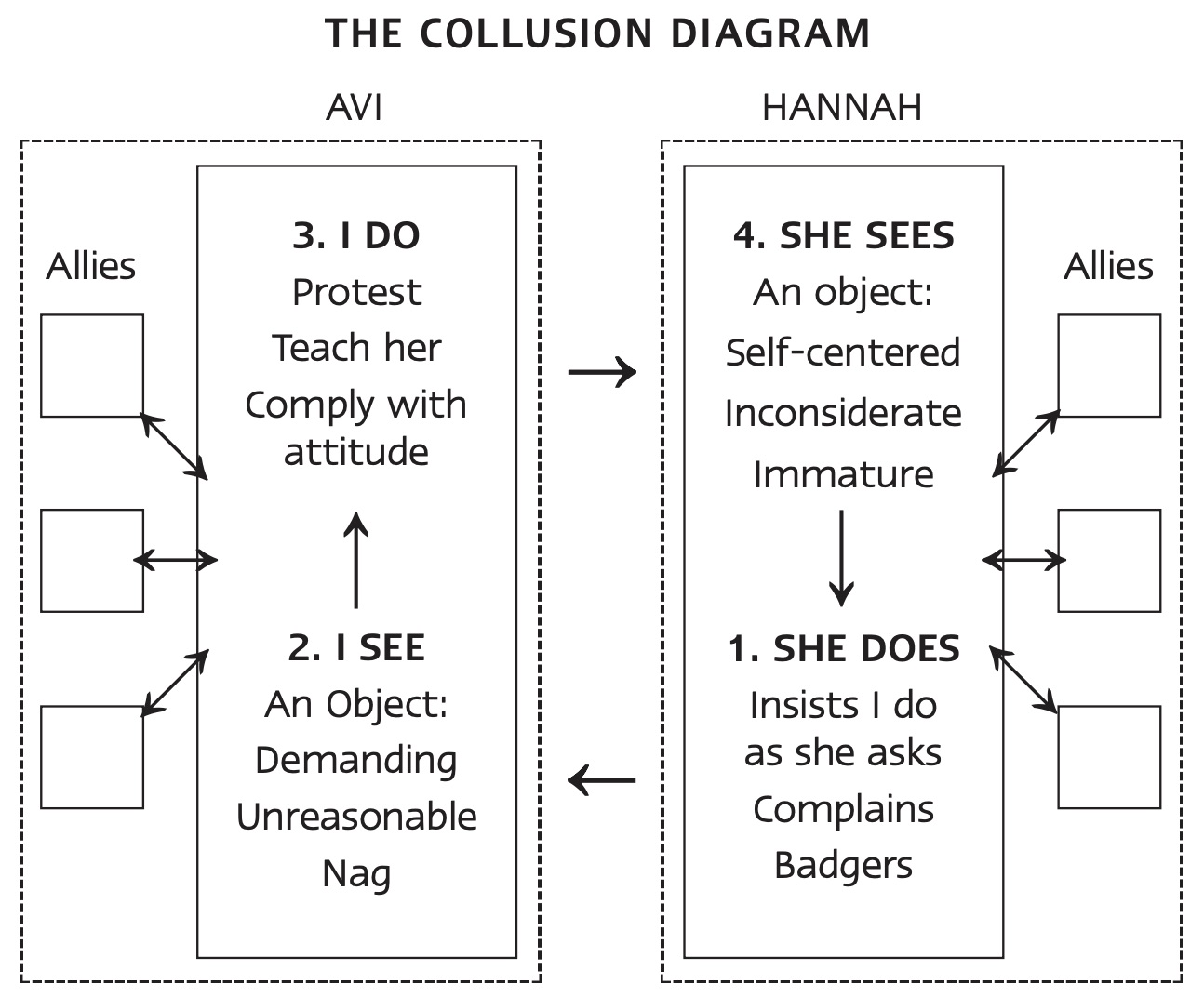
The book introduces the idea of collusion, illustrated through the Collusion Diagram. In collusion:

  • I act from a heart at war.
  • My actions provoke resistance or defensiveness in others.
  • I use their response to justify my original stance.
  • Both sides feel validated and more entrenched.

What feels like self-defense becomes mutual reinforcement. Each person’s behavior becomes proof that the other is the problem. Conflict persists not because issues are unsolvable, but because hearts remain at war.

From Peace to War

The book makes an important clarification: peace is the natural starting point. We do not begin in conflict. We move into it.

That movement happens when we resist acting in line with what we sense we should do for another. As justification begins, the heart shifts from peace to war and we enter familiar patterns the book refers to as “boxes.”

The Boxes We Enter

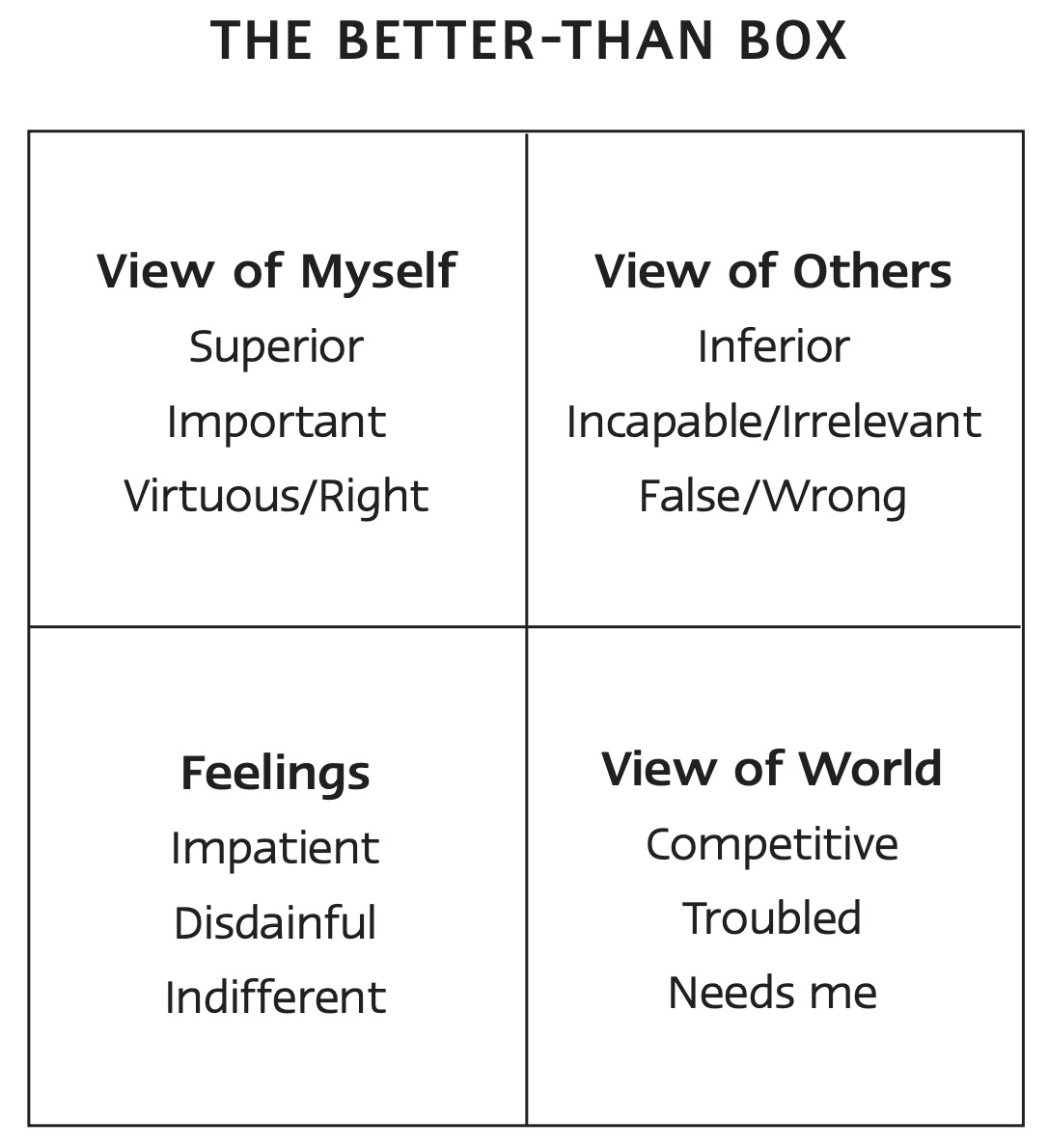
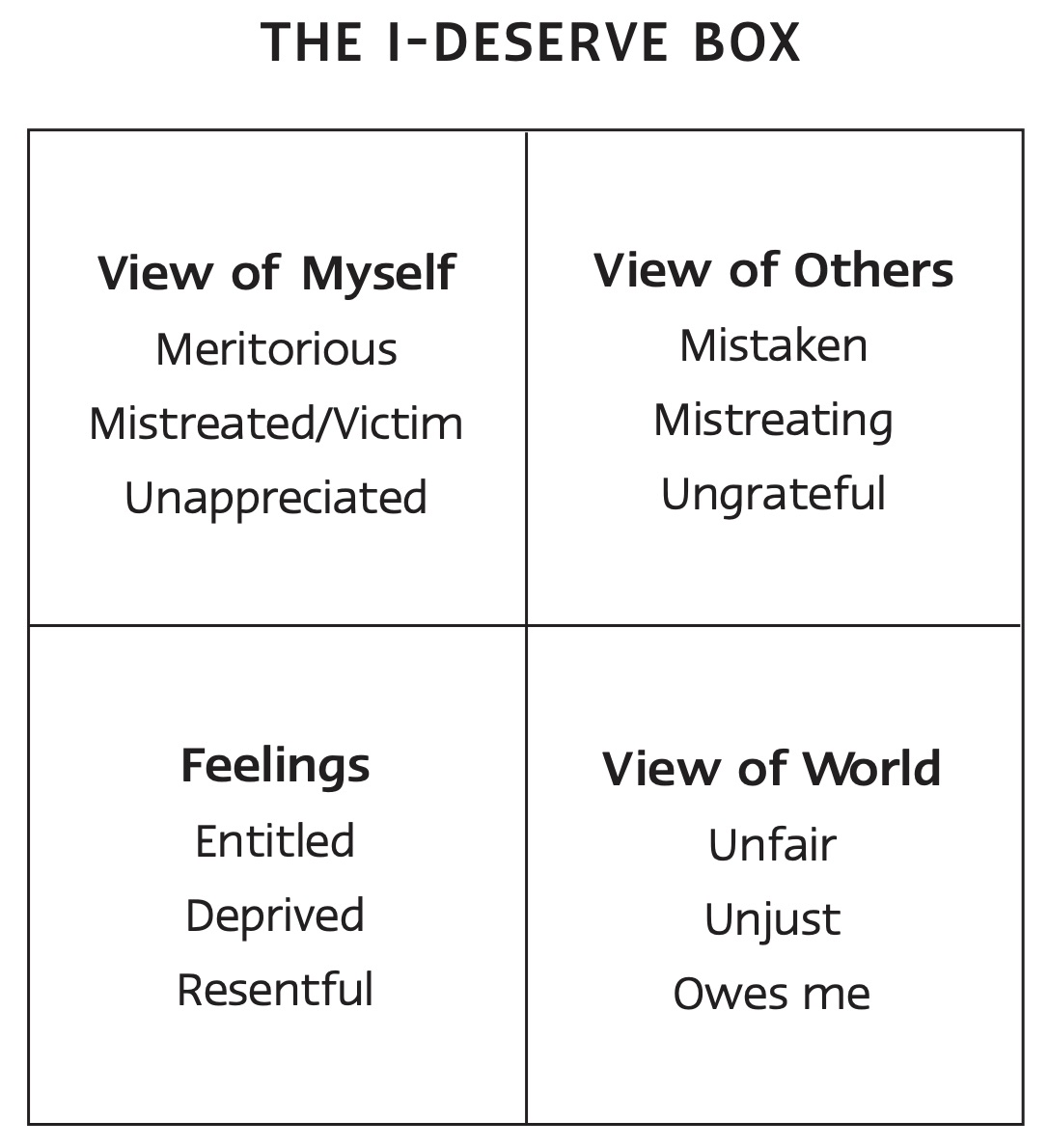
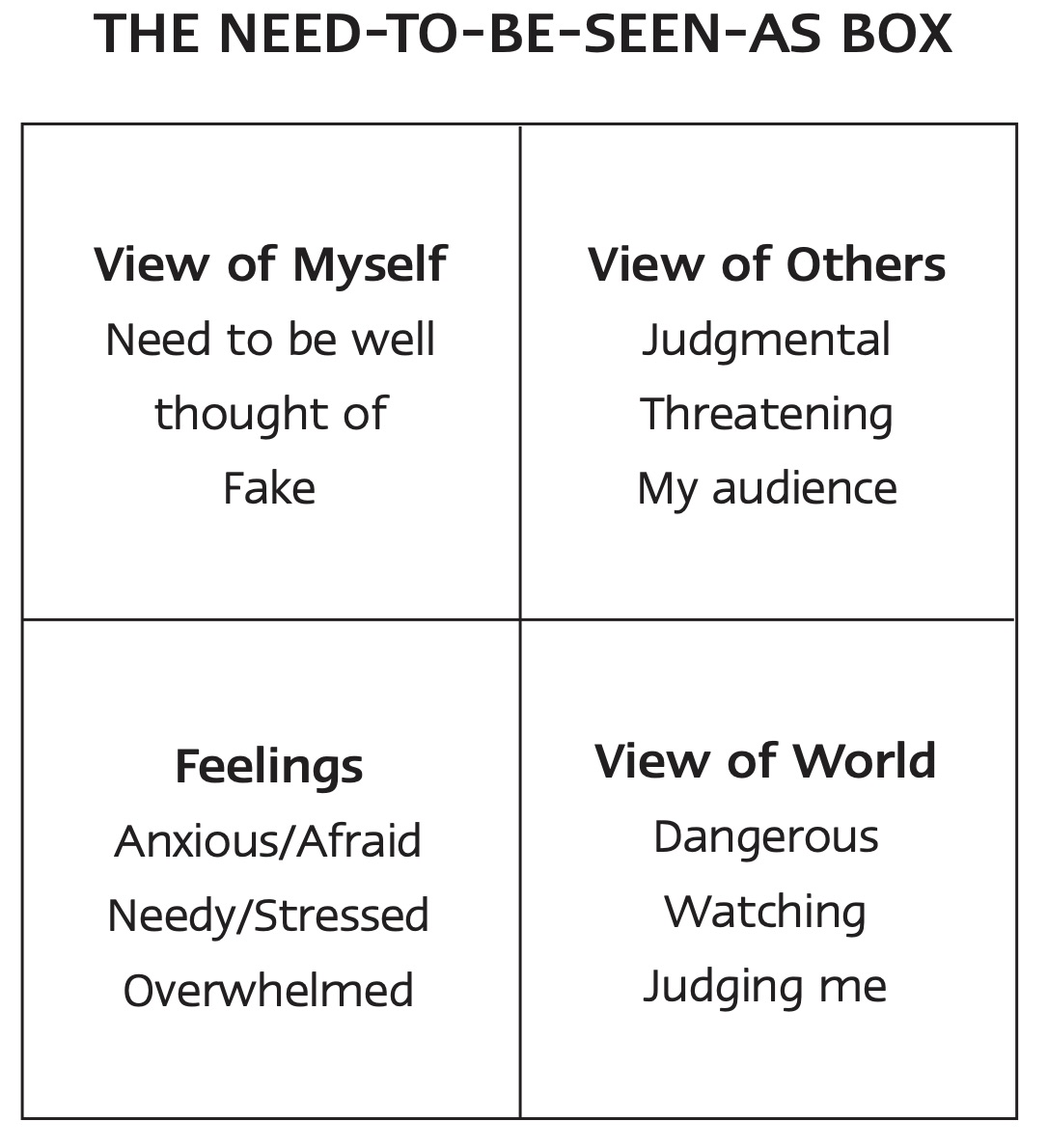
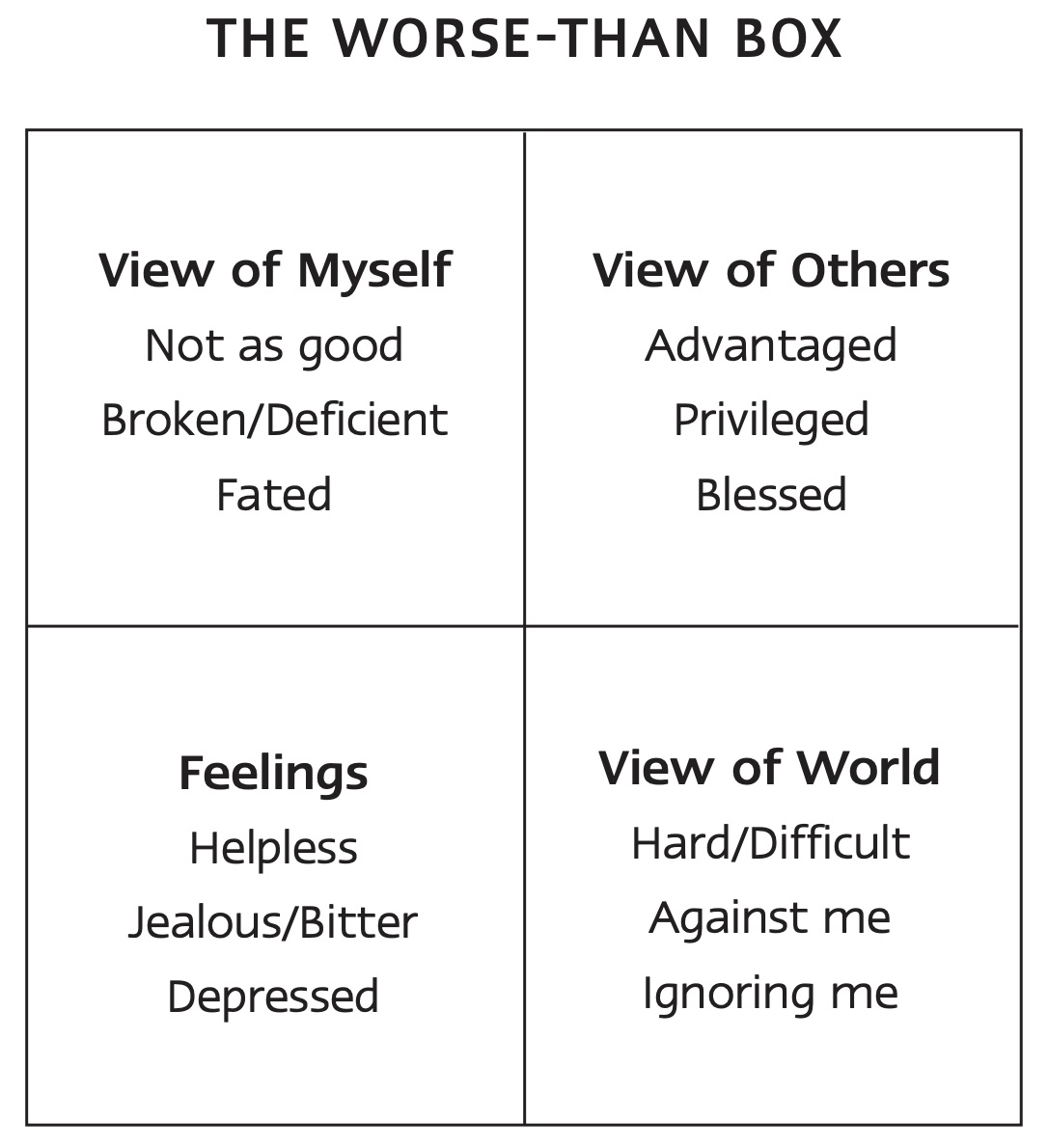
Each box is characterized by four elements: how I see myself, how I see others, how I see the world, and how I feel. There are four typical boxes we enter: Better-Than Box, I-Deserve Box, Need-to-Be-Seen-As Box and Worse-Than Box.

Though these boxes look different, they all share one outcome: others stop being seen as people.

From War to Peace

Moving from war back to peace is not about winning arguments or changing others. It is about recovering clarity.

The book describes this recovery as a process:

  • First, I notice that my heart is at war.
  • Next, I acknowledge my role in sustaining the conflict.
  • Then, I let go of the need to justify myself.
  • Finally, I begin to see others as people again.

Peace does not require agreement. It requires honesty. When justification fades, clarity returns and with it, the ability to act constructively.

Spreading Peace

Peace is not passive, and it is not private. A leader’s mindset shapes culture.

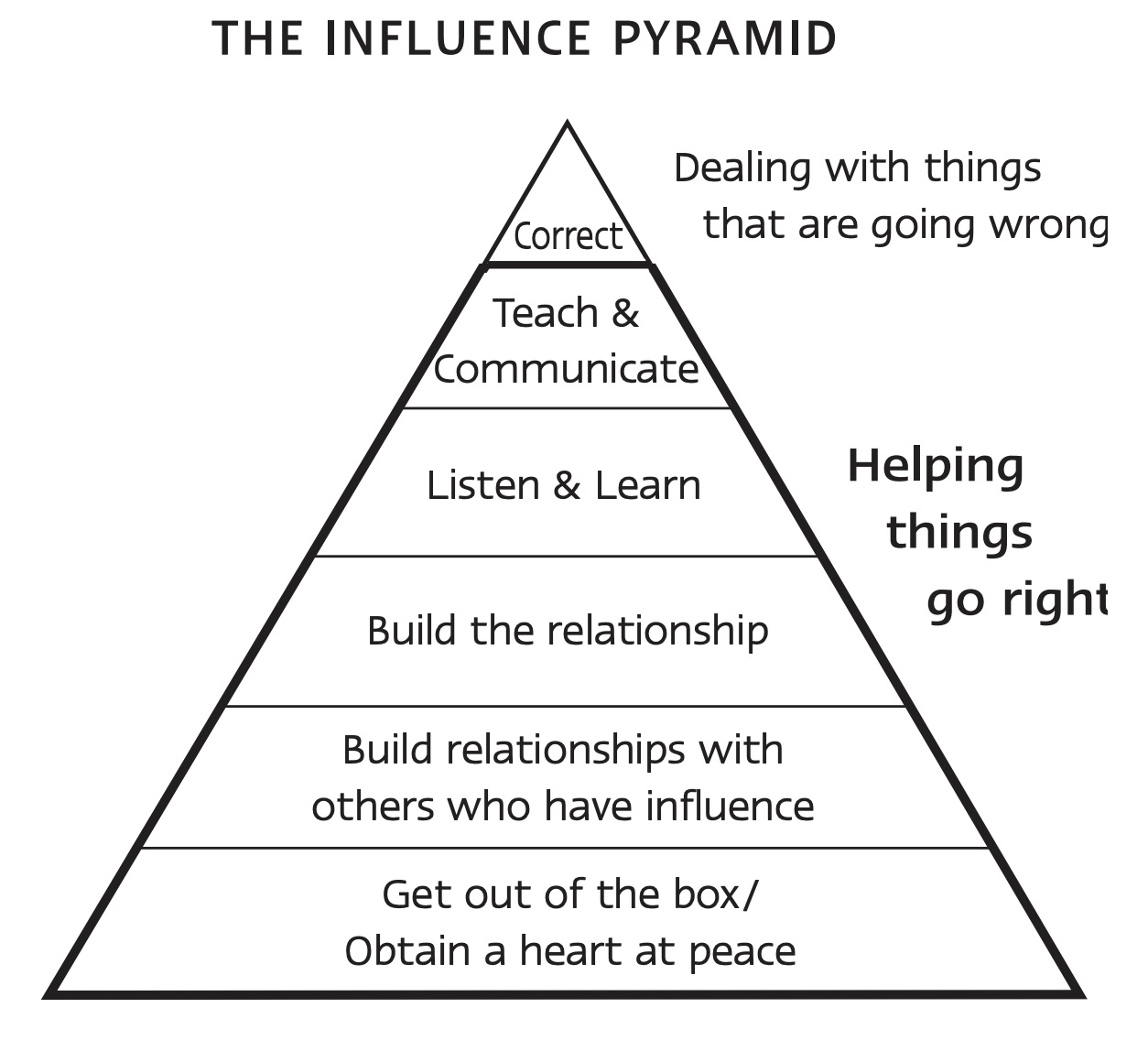
The book shows that influence flows from how we are with others, not just what we do. When leaders operate from peace, accountability becomes cleaner, conversations become more direct, and resistance reduces naturally.

Conclusion: What This Book Teaches Us

The Anatomy of Peace reinforces a powerful leadership truth: conflict cannot be resolved at the level at which it is sustained. As long as we focus only on behavior, communication, or process, we miss the real source.

The book challenges leaders to look inward before looking outward to examine how they see others, especially when things are hard. Peace begins when we stop justifying ourselves and start seeing people as people again.

For leaders, that shift changes everything.

Leadership and Self-Deception

Leadership and Self-Deception by the Arbinger Institute is a thought-provoking book that reveals how we often deceive ourselves without realizing it, justifying our actions while blaming others. This mindset, the book argues, hinders our ability to lead effectively and build meaningful relationships. At the heart of the book lies a powerful metaphor: being “in the box” versus “out of the box”— a reflection of how we view and treat the people around us. The book offers practical insights into how we fall into this mental trap and, more importantly, how we can free ourselves from it

Self-Deception and the “Box”

  • Self-deception is the problem of not knowing and resisting the possibility that one has a problem.
  • No matter what we are doing on the outside, people respond primarily to how we are feeling about them on the inside. And how we are feeling about them depends on whether we are in or out of the box concerning them.
  • Out of the box: I see myself and others more or less as we are – as People
  • In the box: I see myself and others in a systematically distorted way – others as mere Objects.

How we get in the box

  1. An act contrary to what I feel I should do for another is called an act of “self-betrayal”.
  2. When I betray myself, I begin to see the world in a way that justifies my self-betrayal.
  3. When I see the world in self-justifying way, my view of reality becomes distorted.
  4. So, when I betray myself, I enter the box.
  5. Over time, certain boxes become characteristic of me, and I carry them with me.
  6. By being in the box, I provoke others to be in the box.
  7. In the box, we invite mutual mistreatment and obtain mutual justification. We collude in giving each other reason to stay in the box.

We can get out of the box by knowing the material and living it.

Knowing the material:

  • Self-betrayal leads to self-deception and “the box”.
  • When we are in the box, our “what-focus” shifts from achieving results to justifying ourselves.
  • Similarly, our ‘who-focus’ shifts to ourselves instead of the people we are meant to serve.
  • When we are in the box, the following efforts will not work:
    • Trying to change others.
    • Doing our best to “cope” with others.
    • Leaving.
    • Communicating.
    • Implementing new skills or techniques.
    • Changing our behavior.
  • Ultimately, our ability to influence and succeed as leaders depends on whether we operate from inside or outside the box. We can get out of the box as we cease resisting other people.

Living the material:

  • Don’t try to be perfect. Do try to be better.
  • Don’t look for others’ boxes. Do look for our own.
  • Don’t accuse others of being in the box. Do try to stay out of the box ourselves.
  • Don’t give up on ourself when we discover we have been in the box. Do keep trying.
  • Don’t deny that we have been in the box when we have been. Do apologise, then just keep marching forward, trying to be more helpful to others in the future.
  • Don’t focus on what others are doing wrong. Do focus on what we can do right to help.
  • Don’t worry whether others are helping us. Do worry whether we are helping others.

Leadership and Self-Deception reminds us that effective leadership starts with how we see others—and ourselves. When we act against what we know is right, we betray ourselves and enter the box, distorting reality to justify our actions. This mindset not only limits our influence but also impacts those around us. Getting out of the box isn’t about fixing others; it’s about choosing to be helpful, honest, and aware. As leaders, the real shift begins when we stop justifying and start seeing people as people.

Crossing the Rubicon

“Crossing the Rubicon: Wisdom Trails with the Old Monk” by Krishna Kumar Marayil is a thought-provoking book that lingers in the mind, urging deep reflection on the path to a virtuous life. Letting go of behaviors that once brought success can be challenging, yet this book compellingly argues for embracing authenticity. Through engaging anecdotes, it highlights why shedding outdated patterns is essential for true growth. Interestingly, this theme resonates with several books I have read recently, including What Got You Here Won’t Get You There, The Culture Code, Gita for the CEO, Be Water, My Friend, and Hidden Potential.

My key takeaways from the book are:

  • Pick our battles: Some races are best to forsake. Life is not about relentless chasing; success comes from setting our own pace
  • Wanting to stay in control is not the answer to avoiding failure: Worry begins when we try to live in a future that has yet to arrive. Trusting the path we are on allows us to find beauty in each step and truly live in the present, rather than postponing fulfilment to an uncertain future.
  • Discard masks and stay true to ourselves: The temptation to adopt a false persona distances us from our true nature. Avoid being overly accommodating or easily provoked. Authenticity fosters composure, freedom, and ultimately leads to meaningful success.
  • Create an alter ego: Embody a superhero mindset to tackle seemingly insurmountable challenges and pursue our dreams. An alter ego provides the freedom to explore different facets of our personality, navigate difficulties, and unlock hidden potential.
  • Silence is a great source of strength in conversations: When someone falls silent, it might be their path to self-discovery through self-reflection. Directing silence inward enhances self-awareness and helps find answers to problems.
  • Bring our inner devil to the surface: Confronting fears and questioning self-doubt leads to powerful self-reflection. Addressing our inner critic allows us to break free from limitations, challenge the status quo, and pursue our dreams.
  • Embrace the virtuous life: Act from a place of clarity and wisdom rather than being driven by desires. Ambition can be a great motivator, but is rooted in desire. Looking for a sense of recognition outside ourselves leads to restlessness. Shifting focus from personal gain to what benefits others brings clarity, peace, and fulfilment.

Crossing the Rubicon is a compelling guide to self-discovery and transformation. It challenges us to shed past habits, embrace authenticity, and find fulfilment in the present. Through engaging insights and practical wisdom, the book inspires a shift from mere ambition to a purpose-driven, virtuous life.

Hidden Potential

I discovered Hidden Potential: The Science of Achieving Greater Things by Adam Grant through a leadership program’s recommended reading list for 2024. Having admired Grant’s insights in Give and Take and Think Again, my respect for him deepened with this latest book.

Grant builds on a powerful premise: potential isn’t defined by where we start but by how far we are willing to go. This resonates deeply with me – I’ve seen friends achieve extraordinary success over the years, surpassing what once seemed unimaginable.

Skills of Character: Getting Better at Getting Better

The starting point to unlock hidden potential is character. The stereotype is to think of character as a set of principles that people acquired and enacted through sheer force of will. We have the opportunity to view character less as a matter of will and more as a set of skills. It is the learned capacity to live by our principles.

Character is often confused with personality. Personality is our predisposition – basic instincts for how we feel, think and act. Character is our capacity to prioritise our values over instincts. If personality is how we respond on a typical day, character is how we show up on a hard day.

  1. Creatures of Discomfort: Embracing the unbearable awkwardness of learning. Summoning the courage to face discomfort is a character skill – an especially important form of determination. It takes three kinds of courage: to abandon our tried-and-true methods, to put ourself in the ring before we feel ready, and to make more mistakes than others make attempts. The best way to seek growth is to embrace, seek and amplify discomfort.
  2. Human Sponges: Building the Capacity to Absorb and Adapt. Growth is less about how hard we work and more about how well we learn. Absorptive capacity is the ability to recognise, value, assimilate, and apply new information. It depends on two key habits – first is being proactive in seeking new knowledge, skills and perspectives (rather than being reactive), and second is focusing on information that fuels our growth (rather than feeding our ego).
  3. The Imperfectionists: Finding the Sweet Spot between Flawed and Flawless. Perfectionists tend to get three things wrong. First, they obsess about details that don’t matter. They are so busy finding the right solution to tiny problems that they lack the discipline to find the right problems to solve. They can’t see the forest for the trees. Second, they avoid unfamiliar situations and difficult tasks that might lead to failure. That leaves them refining a narrow set of existing skills rather than working to develop new ones. Third, they berate themselves for making mistakes, which makes it harder to learn from them. They fail to realise that the purpose of reviewing their mistakes isn’t to shame their past self. It’s to educate their future self. They key is to shift our attention from impossible  ideas to achievable standards – and then adjust those standards over time.

Structures for Motivation: Scaffolding to Overcome Obstacles

  1. Transforming the Daily Grind: Infusing Passion into Practice. Whereas burnout is the emotional exhaustion that accumulates when we are overloaded, bore out is the emotional deadening we feel when we are under-stimulated. Deliberate play and timely breaks are some of the ways to bring joy to our daily work.
  2. Getting Unstuck: The Roundabout Path to Forward Progress. Skills don’t grow at a steady pace. Improving is like driving up a mountain. As we climb higher and higher, the road gets steeper and steeper, and our gains are smaller and smaller. When we run out of momentum, we start to stall. To move forward, we may have to head back down the mountain. Once we have retreated far enough, we can find another way – a path that will allow us to build the momentum to reach the peak.
  3. Defying Gravity: The Art of Flying by Our Bootstraps. When we are facing a daunting task, we need both competence and confidence. One way to build competence to teach what we want to learn. We remember it better when we recall it and we understand better after we explain it. We can build confidence by coaching – that is offering encouragement to others that we need for ourselves.

Systems of Opportunity: Opening Doors and Windows

  1. Every Child Gets Ahead: Designing Schools to Bring Out the Best in Students. Changing the school culture from winner take all to opportunity for all can create an education system that helps all students reach their potential.
  2. Mining for Gold: Unearthing Collective Intelligence in Teams. Collective intelligence is a group’s capacity to solve problems together. It depends less on people’s cognitive skills than their prosocial skills. Collective intelligence raises as team members recognise one another’s strengths, develop strategies for leveraging them, and motivate one another to align their efforts in pursuit of a shared purpose. Unleashing hidden potential is about more than having the best pieces – it’s about having the best glue. Meetings are hijacked by people who talk and some of the best ideas may never be heard. To unearth the hidden potential in teams, instead of brainstorming, we are better off shifting to brain-writing where everyone write down their ideas before they are taken up for discussion. Instead of a hierarchical organizational structure that is based on a ladder system, building a lattice system where employees have access to multiple leaders can unlock hidden ideas among introverts.
  3. Diamonds in the Rough: Discovering Uncut Gems in Job Interviews and College Admissions. Instead of looking at past experience or past performance, we should find out what they have learned and how well they can learn.

Hidden Potential challenges the notion that talent is innate, emphasizing instead the power of character, motivation, and opportunity in unlocking growth. Adam Grant explores how embracing discomfort, fostering adaptability, and rethinking perfection can accelerate personal development. He also highlights structural changes—both in organizations and education—that can help individuals and teams achieve more than they ever imagined. The book is a compelling guide to transforming potential into performance.

Be Water, My Friend

My coach referred me to a book on Bruce Lee’s philosophy written by his daughter Shannon Lee and titled after his famous quote “Be Water, My Friend”. I have often resolved to be fluid and adapt to situations to succeed amid adversity, this book provided me with science and philosophy that leads to benefits of fluidity.

The Water Way: Embrace the characteristics of water – being formless, shapeless and taking the shape of the container it is placed in. Always look for paths to flow around obstacles rather than being stuck in resistance. The basic principles of water that can guide our way:

  • No limitation: be unstoppable
  • Be aware: be fully present and accountable in the face of challenging scenarios and people
  • Be pliable: be flexible to adapt to situations
  • Have appropriate tension: on-guard position that is both relaxed yet active
  • Be purposeful
  • Be whole

The Empty Cup: The usefulness of a cup is in its emptiness. Learning will not happen when we approach a problem thinking we already know the root cause. Adopt choiceless awareness – approach all that is happening around us without judging it, without making a choice or creating a story about it while maintaining full awareness of it. The notion of emptying our cup is the idea of letting go of the past and the future in favour of the present.

The Eternal Student: When we embrace the water way and empty our cup all the time, we make new discoveries every day and will be in a constant state of learning.

The Opponent: To know oneself is to study oneself in action with another person. Life is not a competition, it is a co-creation. There are no winners and losers, overcoming the six diseases below will help us move from a sense of striving to the simple, active state of living:

  • The desire for victory
  • The desire to resort to technical cunning
  • The desire to display all that has been learned
  • The desire to awe the enemy
  • The desire to play the passive role
  • The desire to rid oneself of whatever disease one is affected by

The Obstacle: We will always encounter obstacles in pursuit of our dreams. We need to be aware of the negative emotions that blunt our resolve to succeed – worry makes a problem out of the problem, pessimism makes a problem harder by implying it is impossible to solve, fear stops us from attacking the problem as we are afraid of failing, doubt gives an excuse not to solve the problem. The way to walk on when faced with obstacles is to gather our will power and stay focused on our dream.

The Rainstorm: No matter what, you must let your inner light guide you out of the darkness. There will be times we will be hit hard by adversity, we must keep faith and stay focused on our purpose.

The Living Void: The four stages of cultivation that can lead us to the state of nirvana embracing the water way:

  • Stage 1 – Partiality: This is where most of us start and this is unconscious behaviour. There is inexperience and wildness in what we do, without refined technique and skill. We may get things done but without awareness.
  • Stage 2 – Fluidity: We reach this stage when we have acknowledged that we have a lot to learn and begin work on ourselves. It is a stage of budding conscious awareness. We are open, engaged in learning and bettering ourselves. We learn how to accept the ever-changing nature of life and to work with rather than against it.
  • Stage 3 – Emptiness: In this stage of maturity, we are unlimited. We stand at the centre point of possibility with the ability to move in any direction. This is no longer tactical readiness but rather total awareness with instantaneous expression. At this stage, some magical things start to happen:
    • Our pace quickens
    • We feel powerful
    • We feel safe
  • Stage 4 – Jeet Kune Do: Using no way as way, having no limitation as limitation.

Be Water, My Friend is more than just a book about Bruce Lee’s philosophy—it is a guide to living with adaptability, resilience, and purpose. By embracing the fluid nature of water, emptying our cup to stay open to learning, and overcoming obstacles with unwavering focus, we cultivate a mindset that enables growth and transformation. Life isn’t about rigid control but about flowing with challenges and opportunities alike. The ultimate goal is to reach a state of mastery where we move with effortless awareness—using no way as way, having no limitation as limitation.

Gita for the CEO

I received Gita for the CEO from a friend, and it turned out to be a page-turner packed with wisdom! The book draws lessons from the Bhagavad Gita, presenting them in a modern corporate context to address leadership, decision-making, and personal growth.

Ten Sutras from Bhagavad Gita for Leadership Excellence

  1. Be adaptable: Don’t hold on to the things that hold us back. Embrace the learning opportunities present in every situation. In contemporary times, adaptability is even more critical as technology accelerates change in the world around us.
  2. Be visionary: Don’t let what we want now come in the way of what we truly aspire to achieve. Go beyond stereotyped definitions of success that choke human potential, and tap into the full range of abilities at our command. Remember, “We cannot solve our problems with the same thinking we used when we created them.”
  3. Be bold: Even if we have to live with fear, we don’t have to live in fear. Too much fear makes us spineless and paralyzed, while too little fear makes us foolhardy and reckless. Fear subordinated to a higher vision fosters courage and purpose, which is what we should strive for.
  4. Be mindful: Identify our emotions; don’t identify with them. Observe the moods and impulses that could sabotage our plans, and explore ways to discipline the mind. Mindfulness involves three steps:
    • Awareness: Being conscious of our situations, bodily sensations, and emotions.
    • Purposefulness: Clearly understanding what truly matters to us.
    • Thoughtfulness: Objectively evaluating and understanding external and internal events.
  5. Take responsibility: Our actions matter, even when they don’t seem to. Karma reflects the sum total of our past actions, good and bad. A portion of this karma combines with our present actions to shape outcomes. The Mahabharata condemns using destiny as an excuse for passivity. While we are the makers of our destiny, we are not its masters, as outcomes depend on factors beyond our control.
  6. Watch our words: Be empathetic and emphatic; communicate with words that are sensitive and sensible. Use the power of words to build bridges, not walls.
  7. Don’t lose perspective: Even when life determines our problems, we determine their size. Three insights to keep perspective:
    • Be stoic without eternalizing problems.
    • Leverage the power of humility.
    • Tap into tolerance to stay on track.
  8. Be grateful: What we have is God’s gift to us; what we do with it is our gift to God. Even if we can’t be grateful for all situations, we can be grateful in all situations. Leaders can work with motivations such as fear, desire, duty, or love. Love is the highest motivation, where one is deeply fascinated by their work and considers it a form of worship.
  9. Prioritize self-care: We are our first asset and should rejuvenate ourselves by connecting with the infinite reservoir of strength within. Negative emotions like irritation, frustration, and envy can block us from effectively using our intelligence. We can overcome them and reconnect with our potential by:
    • Strengthening conviction through association: Learn and remain optimistic by associating with a guru, coach, or friends who create a positive environment.
    • Sharpening intelligence with books: In an age of information overload, reading helps separate the essential from the peripheral.
    • Sonic spirituality: Meditation and connecting with our inner self foster resilience and clarity.
  10. Be resilient: Hold your plans lightly and your purpose tightly. Never lose heart. Stay focused on a higher vision and purpose.

Yoga: Connecting with Higher Consciousness

The book also discusses yoga, which means “to connect.” It is a system designed to connect human consciousness with divine consciousness. The Bhagavad Gita outlines four types of yoga:

  • Karma-yoga: Connecting through action.
  • Jnana-yoga: Connecting through knowledge.
  • Dhyana-yoga: Connecting through meditation.
  • Bhakti-yoga: Connecting through devotion.

While yoga is often equated with meditation, that is just one aspect, represented by dhyana-yoga.

Gita for the CEO offers timeless wisdom from the Bhagavad Gita, reimagined for the modern corporate leader. Through ten actionable principles and the concept of yoga, the book inspires readers to lead with adaptability, mindfulness, gratitude, and resilience. It emphasizes a balance between achieving external success and cultivating inner strength, providing leaders with a roadmap for personal and professional excellence.

The Culture Code

I wrapped up 2024 by completing the book The Culture Code by Daniel Coyle. This insightful read explores the secrets of highly successful groups, examining the dynamics that foster trust, cooperation, and collaboration. It highlights three foundational elements for creating cohesive and thriving cultures: building safety, sharing vulnerability, and establishing purpose.

Build safety: Building safety is akin to a fluid, improvisational skill—much like passing a soccer ball to teammates during a game. It involves recognizing patterns, reacting quickly, and delivering the right signals at the right time.

  • The good apples: A single positive, proactive individual within a group can act as a catalyst for trust and collaboration, shielding the team from negativity and fostering collective success.
  • Signal that we are close, we are safe, we share a future: As a leader, be intentional about sending these messages to the team continuously.
  • How to build belonging? Build relationships by consistently delivering small, authentic signals of care, trust, and inclusion
  • How to design belonging? Craft deliberate systems, rituals, and structures that reinforce group identity and foster a deep, enduring sense of unity and shared purpose
  • Ideas for action:
    • Overcommunicate your listening (through body language, asking questions and paraphrasing)
    • Spotlight your fallibility early-on (especially if you are a leader)
    • Embrace the messenger
    • Preview future connection
    • Overdo thank-yous
    • Be painstaking in the hiring process
    • Eliminate bad apples
    • Create safe, collision-rich spaces
    • Make sure everyone has a voice
    • Pickup trash
    • Capitalize on threshold moments
    • Avoid giving sandwich feedback
    • Embrace fun

Share vulnerability: Exchanges of vulnerability, which we naturally tend to avoid, are the pathway through which trusting cooperation is built.

  • Embrace the vulnerability loop: Institute After Action Reviews (AAR) and BrainTrust meetings where all team members candidly share their learnings, feedback and observations.
  • Ideas for action:
    • Make sure the leader is vulnerable first and often
    • Overcommunicate expectations
    • Deliver the negative stuff in-person
    • When forming new groups, focus on two critical moments – the first vulnerability and the first disagreement
    • Listen like a trampoline
    • In conversation, resist the temptation to reflectively add value
    • Use candor generating practices like AARs, BrainTrusts and Red Teaming.
    • Aim for candor, avoid brutal honesty
    • Embrace the discomfort
    • Align language with action
    • Build a wall between performance review and professional development
    • Use flash mentoring
    • Make the leader occasionally disappear

Establish purpose: The difference with successful cultures seems to be that they use the crisis to crystallize their purpose. When leaders of those groups reflect on failures later, they express gratitude for those moments, as painful as they were, because they were the crucible that helped the group discover what it could be.

  • Name and rank our priorities
  • Be ten times as clear about our priorities as we think we should be
  • Figure out where our group aims for proficiency and where it aims for creativity:
    • Proficiency: Skills of proficiency are about doing a task the same way, every single time delivering machine-like reliability. They tend to apply in domains in which the goal behaviors are clearly defined, such as service. Building purpose to perform these skills is like building a vivid map with spotlight on the goal and providing crystal-clear directions to the checkpoints along the way. Ways to do that include:
      • Provide clear, accessible models of excellence
      • Provide high-repetition, high-feedback training
      • Build vivid, memorable rules of thumb (if X, then Y)
      • Spotlight and honor the fundamentals of the skill
    • Creativity: Creative skills are about empowering a group to do the hard work of building something that has never existed before. Generating purpose in these areas is like supplying an expedition – provide support, fuel and tools to serve as a protective presence that empowers the team doing the work. Ways to do that include:
      • Keenly attend to team composition and dynamics
      • Define, reinforce and relentlessly protect the team’s creative autonomy
      • Make it safe to fail and to give feedback
      • Celebrate hugely when the group takes initiative
  • Embrace the use of catchphrases
  • Measure what really matters
  • Use artifacts
  • Focus on bar setting behaviors

The Culture Code by Daniel Coyle reveals that the key to building successful groups lies in fostering safety, embracing vulnerability, and crystallizing purpose. By creating environments where individuals feel valued and secure, encouraging open and candid exchanges, and aligning actions with a shared mission, we can unlock the full potential of teams. Whether in professional settings or personal endeavors, this book provides actionable insights to cultivate a culture of trust, collaboration, and success.